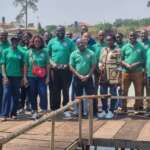
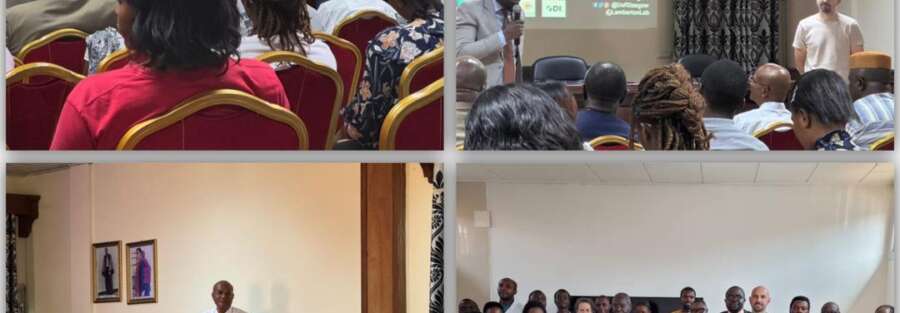
In a context where Cameroonian scientific research must combine excellence with limited resources, the Immunobiology and Helminth Infections (IBHI) laboratory has made 2025 a pivotal year. Under the coordination of Dr. Justin Komguep Nono, the unit has deployed an unprecedented capacity-building strategy, training researchers, laboratory technicians, and students in cutting-edge practices and technologies.
The year 2025 thus saw the deployment of an arsenal of training programs covering the entire value chain of clinical and biomedical research, from good laboratory practices to artificial intelligence applied to drug discovery.
Quality and compliance: the foundations of research
Training on Good Clinical Laboratory Practice (GCLP) was the cornerstone of the 2025 program. Faced with regulatory compliance challenges and growing ethical requirements, this training enabled participants to master the fundamental principles of generating reliable, reproducible, and ethically sound data.
Participants were trained in quality management systems in clinical laboratories, strengthening compliance with ethics and regulatory bodies, while consolidating the spirit of accountability and continuous improvement that must drive any laboratory of excellence.
Understanding the healthcare system to better serve it
Relevant scientific research cannot be conducted in isolation. This is why the IBHI laboratory organized training on the Cameroonian healthcare system, co-facilitated by Dr. Frida Manuella Magnoui Epse Ndongo and Dr. Ngum Lesley Ngum. The objective: to bridge the gap between research and the real challenges of the healthcare system.
Discussions focused on the organization of the Cameroonian healthcare system, different levels of care and governance, health priorities and policies, as well as critical thinking in clinical research. An essential training to help researchers understand the context in which their discoveries will be applied.
From literature review to scientific publication
Publishing in high-level scientific journals remains a major challenge for African researchers. To address this, intensive training on literature review and scientific writing was deployed, under the direction of Dr. Mireille Kameni, Dr. Martin Gael Oyono, Jean Thierry Ebogo Belobo, and Dr. Ngum Lesley Ngum.
Participants learned to identify different types of reviews, when and how to apply them, to critically analyze a scientific paper, and above all to write manuscripts for peer-reviewed, high-impact journals. Crucial skills to increase the international visibility of Cameroonian research.
The omics and bioinformatics revolution
In a world where biomedical research generates massive amounts of data, mastering bioinformatics is becoming essential. Professor Emile Chimusa, from Northumbria University in the United Kingdom, led an advanced training in July on multi-omics data science and bioinformatics analysis.
On the program: high-performance computing, transcriptomics, metagenomics, metabolomics, and proteomics. The focus was on data mining and biomarker discovery for infectious diseases, with schistosomiasis as a case study. A training that positions the IBHI laboratory at the forefront of modern biomedical research.
Artificial intelligence and drug discovery
Artificial intelligence (AI) and machine learning (ML) are revolutionizing drug discovery. These technologies enable rapid analysis of massive datasets to identify therapeutic targets, design new molecules, and predict their efficacy and toxicity.
This training, led by Dr. Gemma Turon and Dr. Miquel Duran from Ersilia (Spain) in October, introduced participants to AI and ML concepts applied to drug discovery, AI-assisted pharmaceutical development pipelines, and the use of open-source resources such as the Ersilia Model Hub. A promising opening toward computational chemistry and rational drug design.
Biostatistics and data analysis with R
No quality research can do without rigorous statistical analyses. The training in biostatistics and data analysis using R software, led by Mr. Domkam Irénée in August, enabled participants to master statistical variables, statistical tests, regression analysis, and follow-up data analysis.
These skills are essential for designing valid studies, collecting robust data, correctly interpreting results, and making evidence-based decisions, while prioritizing patient care.
An investment in the future of Cameroonian research
The 2025 review of the IBHI laboratory reflects a clear vision: in a context of limited resources, scientific excellence comes through investment in human capital. By methodically training its researchers, technicians, and students in international best practices and cutting-edge technologies, the laboratory is not merely producing scientific results – it is building the foundations of competitive and sustainable Cameroonian research.