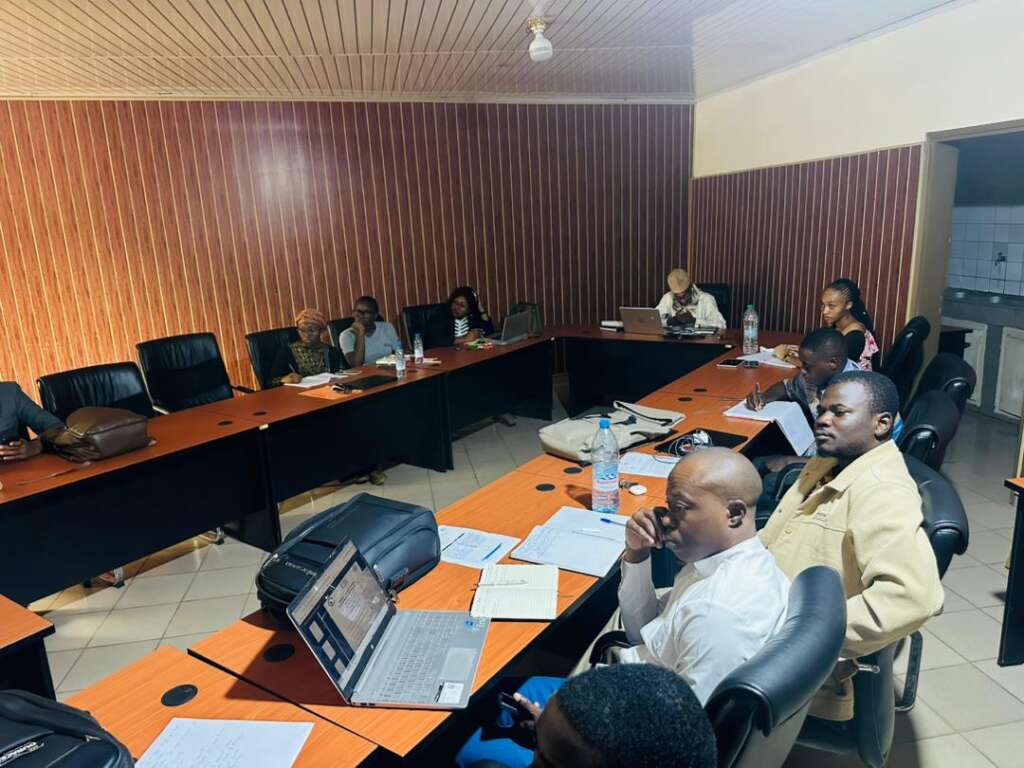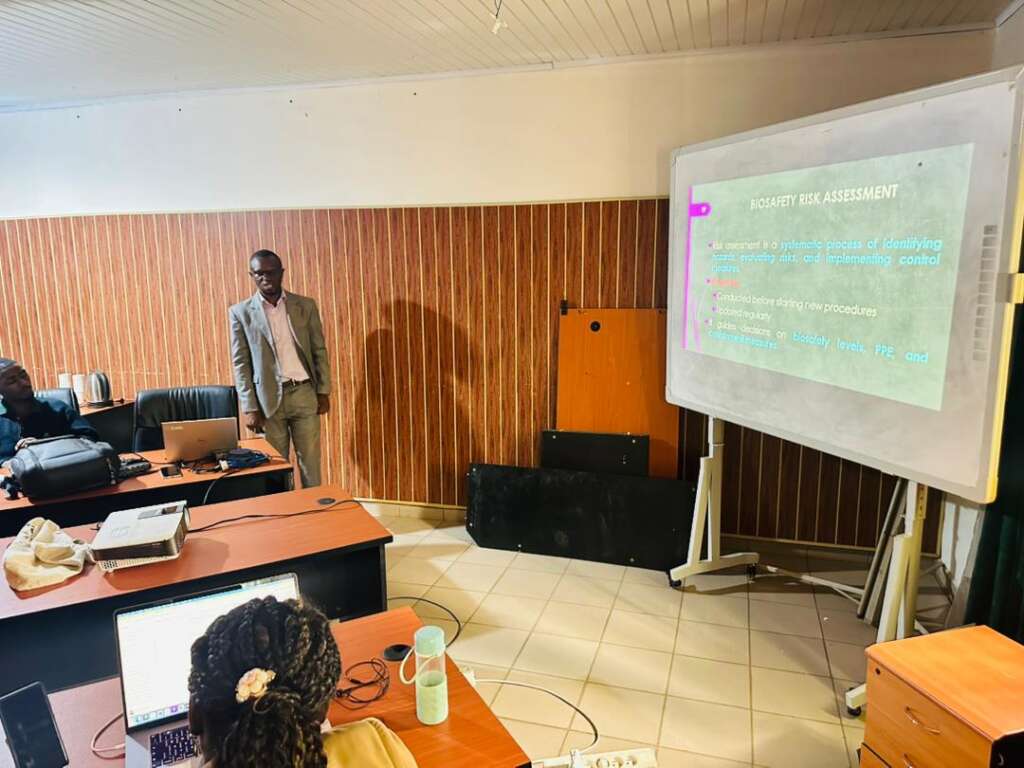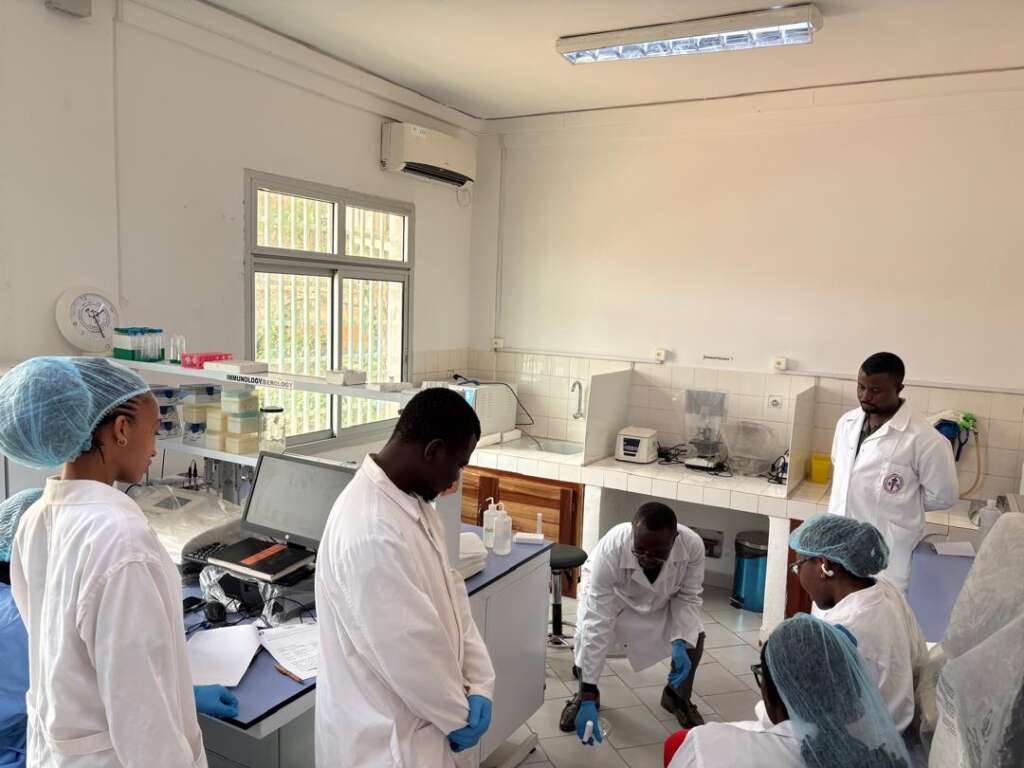

The Molecular Biology and Biotechnology Laboratory/Unit of Immunobiology and Helminth Infection (IBHI) successfully organized a three-day training workshop on “Biosafety and Biosecurity.”
Chaired by Dr. Mohamadou Mansour, the event was held at the annex conference hall of the Institute of Medical Research and Medicinal Plants (IMPM) from Monday, 6 April to Wednesday, 8 April 2026. The training was facilitated by Dr. Ngum Lesley and aimed to equip laboratory personnel with the knowledge and practical skills required to safely handle biological materials, protect themselves and the environment, and prevent the accidental release or intentional misuse of pathogenic agents.
The training opened with welcoming remarks from Dr. Mansour, followed by a presentation of the workshop objectives and participant introductions by Dr. Ngum, coupled with an overview of biosafety and biosecurity principles, highlighting their importance in laboratory settings. Participants were introduced to key concepts, including risk assessment, hazard identification, and appropriate containment measures for handling infectious substances.
Throughout the program, on the first and second days, participants engaged in sessions focused on best practices in biosafety and biosecurity. These included the proper use of personal protective equipment (PPE), safe laboratory procedures, and strategies for minimizing exposure to biological hazards. Emphasis was also placed on compliance with established biosafety guidelines and the implementation of effective risk management practices tailored to the laboratory environment.
Practical discussions and interactive sessions conducted on the third day allowed participants to review and update existing biosafety Standard Operating Procedures (SOPs), ensuring they are adapted to the specific needs of the laboratory. The training also reinforced the importance of fostering a strong laboratory safety culture through continuous awareness and adherence to biosafety measures.
By the end of the training, participants had improved their understanding of biosafety and biosecurity practices, leading to enhanced compliance, reduced laboratory risks, and strengthened safety culture within the laboratory.
The workshop concluded with a summary of key outcomes and a call for continued commitment to maintaining high standards of safety and responsibility in all laboratory activities.